Sizing: the 畳 number is a starting point, not an answer
Japanese units are sold by room size in tatami mats: 6畳用 (around 2.2 kW), 8畳用 (2.5 kW), 10畳用 (2.8 kW) and upwards. Those ratings assume an average, reasonably insulated room.
Add capacity if the flat is on the top floor, if the room faces west, if the ceiling is high, if the room opens onto a kitchen, or if the building is older than about twenty years. An undersized unit runs permanently at full power, cools badly and costs more to run than the larger model would have.
100 V or 200 V, and the dedicated circuit
Small units run on 100 V, larger ones on 200 V, and the plug shapes differ. Almost every air conditioner in Japan is also meant to have its own dedicated circuit (専用回路) back to the distribution board.
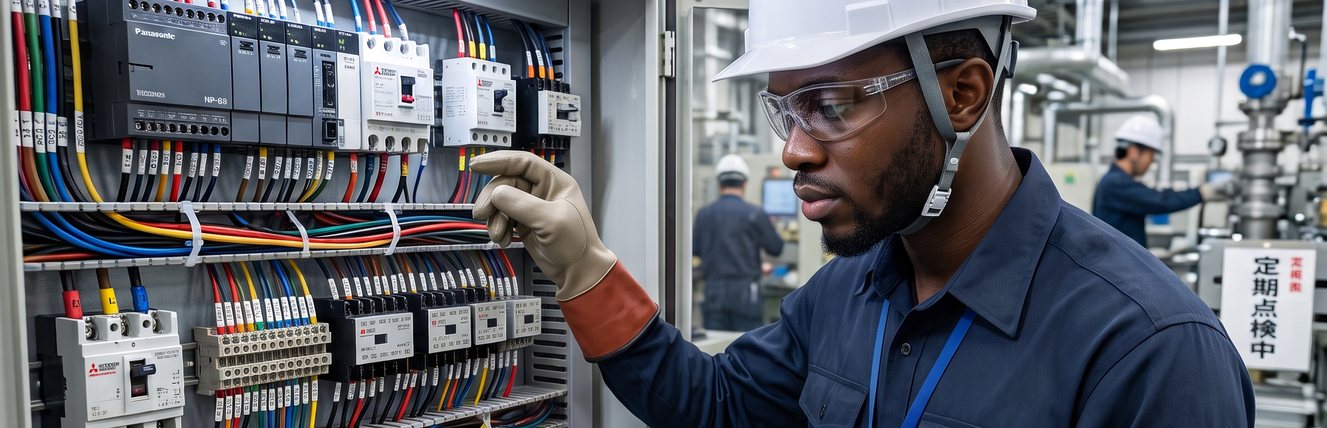
This is where surprise costs appear. If the room has no dedicated outlet, or the wrong voltage at it, installation day turns into electrical work — which needs a licence, and is not included in the price you were quoted.
What “standard installation” excludes
A retailer's 標準工事 covers a straightforward case: an existing sleeve through the wall, a short pipe run, the outdoor unit on the ground or a balcony nearby.
Everything else is extra, and it is common: drilling a new wall sleeve, more than about four metres of pipe, mounting the outdoor unit on a wall or roof, changing the voltage, or adding the dedicated circuit. Ask which of these applies before you buy, not while the installer is standing in your living room.
Renting: ask first
Drilling through the wall of a rented flat, or fixing an outdoor unit to the façade, needs the agreement of the landlord or 管理会社. Getting that in writing before installation day is far easier than explaining it at move-out, when 原状回復 is being calculated.
Living with it
Wash the filters monthly through the summer; it is the single thing that most affects consumption. Use the 内部クリーン drying cycle after cooling — it is what stops the smell that appears in the second year.
A professional clean of the heat exchanger and blower wheel is worth it roughly every two to three years, and immediately if the unit smells or drips. Dripping is usually a blocked drain hose or a pipe that has lost its downward slope, not a dying machine.