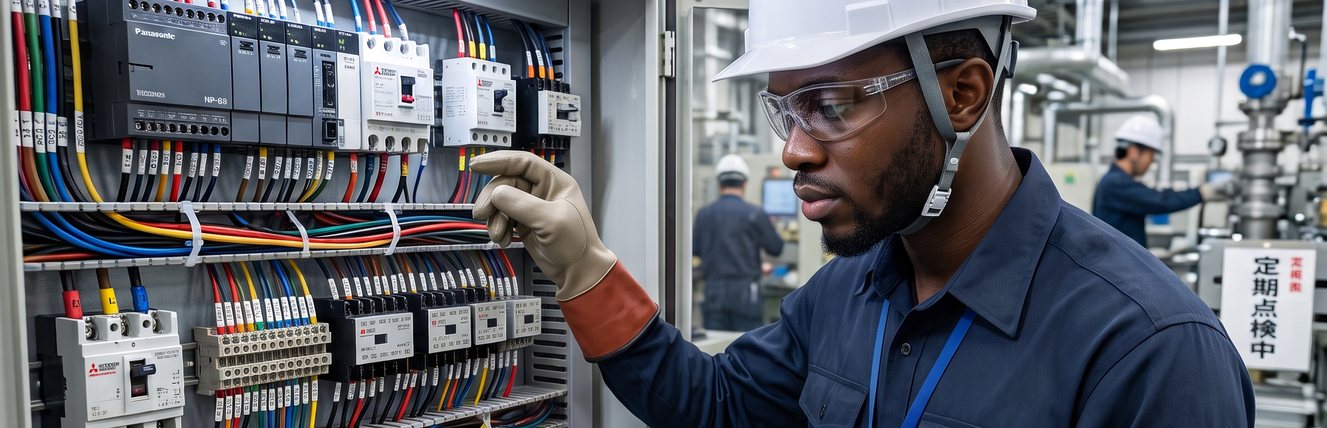
Why the inspection has to happen in Japan
Sending the wrong machine back from Dakar or Marseille costs the freight twice, plus customs on the return, plus months. Rejecting it in Osaka costs a taxi.
It also changes the conversation. A supplier who knows the goods will be looked at before payment behaves differently from one who knows they will be looked at after arrival.
The checklist that catches most problems
Most rejected shipments fail on something entirely ordinary:
- quantity and model numbers against the purchase order, unit by unit;
- serial numbers photographed and recorded;
- voltage and frequency of every motor and power supply;
- visible damage, corrosion and missing accessories;
- packing suited to sea freight — not to a two-hour truck ride;
- manuals, certificates and test sheets, and in which language they are written.
The 50 Hz / 60 Hz trap
Japan runs on two grid frequencies: 50 Hz in eastern Japan including Tokyo, 60 Hz in western Japan including Osaka. Used equipment is often built for one region only, and a motor bought in Tokyo may not be what your 60 Hz country needs.
The same applies to voltage: 100 V single-phase and 200 V three-phase are the normal domestic combinations, and a machine plated 200 V 3-phase 50 Hz will not simply run elsewhere. This is worth checking on the nameplate, in person, before anything ships.
What a useful report contains
A report that only says “passed” is worthless. What you want is dated photographs of the nameplates, of the packing before it is closed, of any defect found, and a plain sentence saying whether the goods may be released. Sent the same day, so you can still stop the truck.
Auditing the supplier, not just the crate
Before a first large order, visiting the factory answers things no email will: whether the workshop is theirs or subcontracted, whether the test bench exists, how many people actually work there, and whether the person answering your messages has ever been on the shop floor.