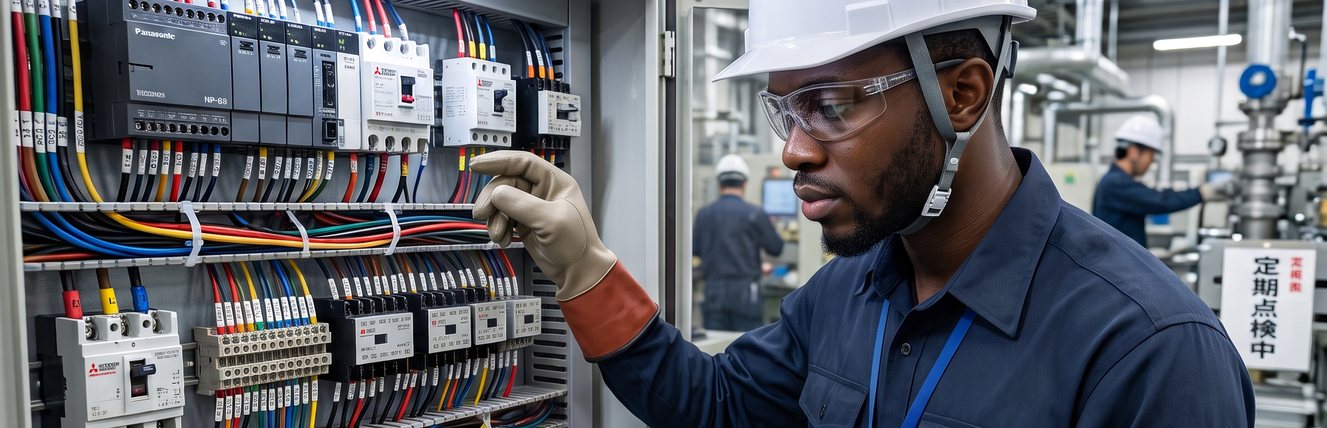
A need that runs both ways
Most quality control requests in Japan come from one of two directions: a Japanese manufacturer shipping abroad, or a foreign manufacturer shipping to a Japanese customer. Either way, electrical and industrial equipment raises the same questions — voltage, frequency, regulatory markings, documentation in the right language — just pointed in opposite directions.
Handling both directions with the same technical rigor, rather than through two different providers, avoids a mismatch between what was checked at departure and what's expected on arrival.
What gets checked on electrical or industrial equipment
The check covers specific points, not a general tick-box:
- voltage and frequency of every motor and power supply, checked against the actual destination;
- regulatory markings — PSE in Japan, CE in Europe — and consistency with the destination market;
- physical condition, transport damage, corrosion, missing accessories;
- test certificates and technical manuals, in the language the recipient expects;
- a power-on functional test where site conditions allow.
Three real cases
Quality audits and pre-shipment inspections for manufacturers of industrial and electrical equipment in Japan — with the non-compliant batch replaced, in an estimated 5–10% of cases, instead of a costly equipment return.
Ongoing support for a foreign company importing electrical equipment into Japan: compliance verification and inspection before every delivery to the end customer.
Quality control for foreign manufacturers of electrical and industrial equipment shipped to Japan.
Why an engineer rather than a generalist inspector
Large inspection bodies apply a standardized checklist, often with a different inspector on each assignment. Here, the check is done by an electrical engineer — someone who understands why a voltage reading is a problem, not just that it differs from the expected figure, and who can talk directly to the supplier's technical team in Japanese.
How it works
The scope is agreed in advance — which equipment, checked against which specification. The inspection happens at the supplier's site or on receipt, with a photo report sent the same day, in English, French or Japanese depending on the recipient.