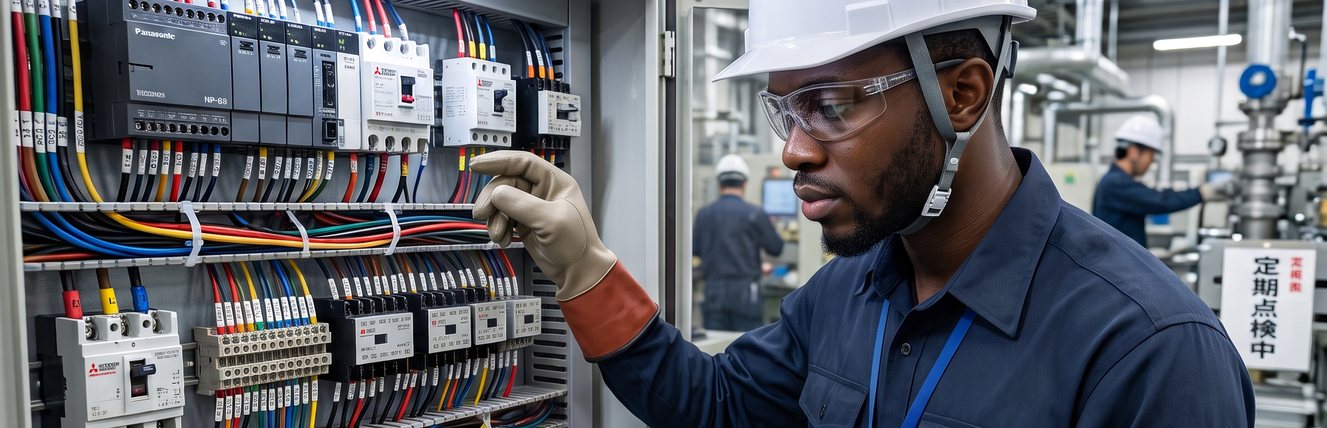
What each visit covers
Every visit follows the same checklist, whether it is the first inspection or the fifth.
- Visual inspection of the main and sub distribution boards
- Tightening of screw terminals and connection points, which loosen over time from vibration and heating and cooling cycles
- Thermographic (infrared) imaging of panels and connections to flag heat build-up before it causes a fault
- Cleaning of air-conditioning filters and coils
- Function testing of smoke and fire detectors
- A photo report documenting what was found and what was done, delivered after the visit
Visit frequency
Sites are set up for either a semi-annual or an annual visit, depending on the age of the equipment, how continuously it runs, and how the space is used. Older distribution boards and spaces with near-constant HVAC operation generally call for the shorter interval.
The schedule is fixed when the contract starts, so visits happen on a known date rather than whenever something starts acting up.
Who this is for
This contract is built around buildings that have electrical and HVAC equipment but no facilities staff watching it day to day.
- Small foreign-owned shops and restaurants
- International schools
- Landlords managing rental properties in Japan from abroad or without a local property manager
- Local subsidiaries of foreign companies running an office or small facility
Communication
Site visits, findings, and reports are handled directly in English. Japanese is available where a building also has local staff or a Japanese-speaking owner who needs to be kept in the loop. No interpreter or intermediary is required.
What this does not cover
A maintenance visit is an inspection and upkeep visit, not a repair call.
- Repair or replacement of parts found to be faulty during an inspection — these are scoped as separate work once identified
- Emergency or same-day callouts outside the scheduled visit
- Major electrical work such as panel upgrades, rewiring, or new circuit installation
- Full HVAC servicing such as refrigerant recharge or compressor repair — the contract covers cleaning, not mechanical servicing